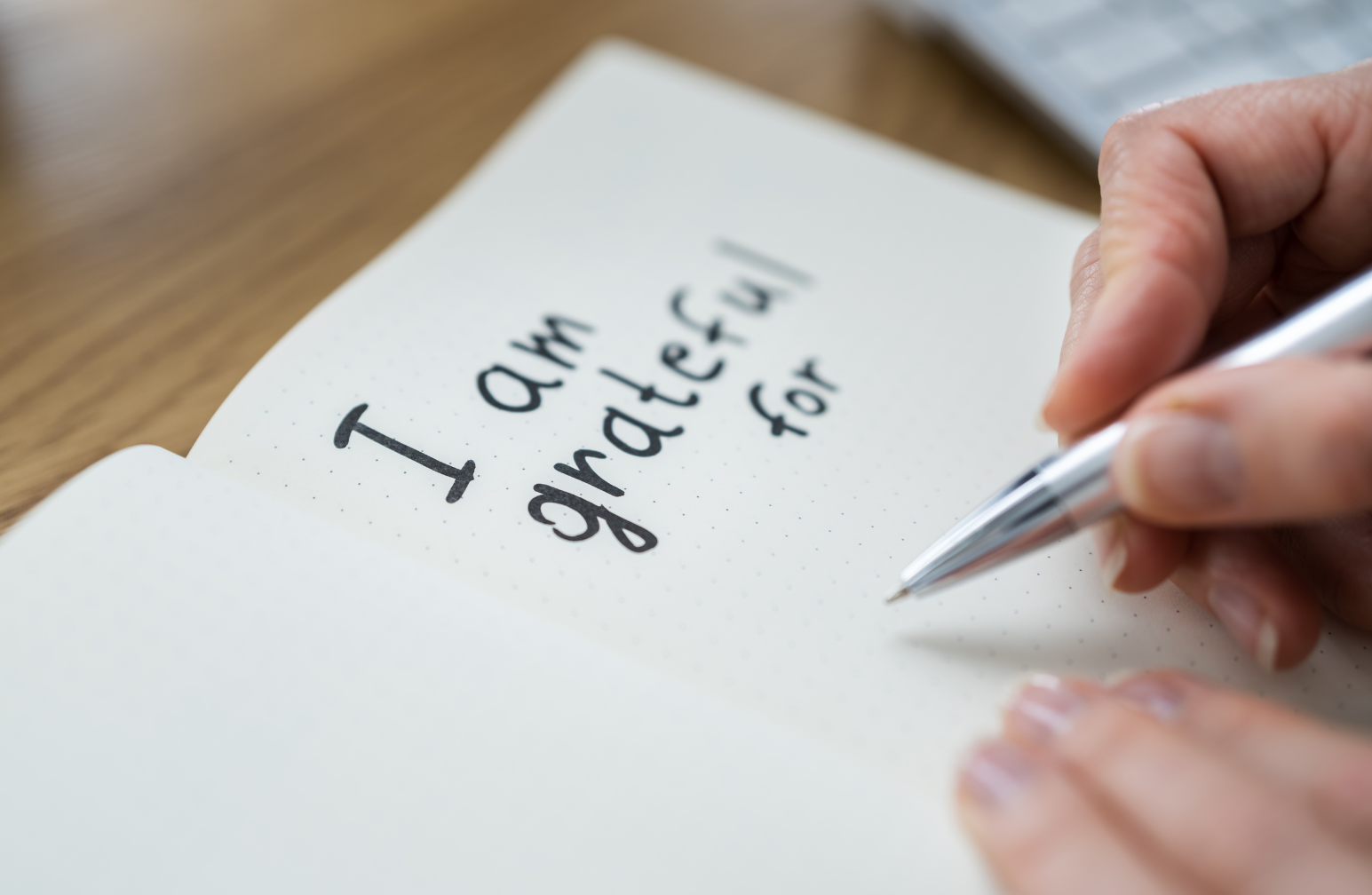
As we move towards the Thanksgiving holiday, I thought it might be helpful to invite my readers to pause and take some time to be grateful.
I acknowledge that this isn’t always easy. For some of us, me included, we can get caught up in busyness and pressure, the worry that we won’t get everything done, the worry that there will be family tensions when everyone is together.
Something I find inspiring comes from recognizing that we all have the power to choose to be grateful.
Google defines gratitude as “a simple yet powerful emotion that means feeling thankful and appreciative for the good things in your life. It’s about recognizing and valuing the kindness, help, or positive experiences you’ve received from others or from life itself. Gratitude involves a sense of warmth and thankfulness, which can boost your mood, strengthen relationships, and enhance your overall well-being. It’s like a mental and emotional thank you that reminds you of the positive aspects of your life, even in challenging times.” [Credit to Dr. Sravya Vuppalapati for this definition.]
We can feel grateful for tangible things we have: our homes, our “things,” the people in our lives who love us, support us, challenge us. We can be grateful for our pets, our cars, our clothing, our food, our technology that uses computers on which we can research and learn, just to name a few.
We can be grateful for the things that are intangible, a list that I think this much longer than a list of tangible things. At the top of my list is the gift of love, to both give and receive it. Then I would include my ability to experience the joy and peace that is the result of my faith journey. A few other things on my list for which I am grateful: my ability to be creative, experiences that are fun, challenges that stretch me, having the power to think, the power to process ideas, needs and feelings. How many of these can you relate to? Did thinking about them create flashbacks of moments when you experienced these?
Many experts recommend that to enhance the gratitude you experience, keep a gratitude journal where you record the specific moments you experience gratitude. Keep your journal in a spot where you can jot down descriptions of moments when you were grateful. As you record these moments, notice the resulting warm feelings that wash over you from knowing you are blessed in so many ways. You can also keep your list on your phone.
If writing isn’t your shtick, you can practice creating mental lists during the day and especially when you’re getting ready to go to sleep. (This makes me think of the song, “Count Your Blessings Instead of Sheep” written by Irving Berlin from the 1954 film White Christmas. The lyrics are at the end of this blog.) According to Wikipedia, “The song arose from a personal experience of Berlin when his doctor suggested he try ‘counting his blessings’ as a way to deal with insomnia brought on by stress.” (And it worked!)
In the article from the Greater Good Magazine entitled “Six Habits of Highly Grateful People,” the authors share the following insights: highly grateful people take the good things they experience in life as gifts, not birthrights. “In all its manifestations, a preoccupation with the self can cause us to forget our benefits and our benefactors or to feel that we are owed things from others and therefore have no reason to feel thankful,” writes Robert Emmons, co-director of the GGSC’s Gratitude project. In these circumstances, “counting blessings will be ineffective because grievances will always outnumber gifts.”
They go on to share the following: “What’s the opposite of gratitude? Entitlement—the attitude that people owe you something just because you’re so very special.”
“The antidote to entitlement… is to see that we did not create ourselves—we were created, if not by evolution, then by God; or if not by God, then by our parents. Likewise, we are never truly self-sufficient. Humans need other people to grow our food and heal our injuries; we need love, and for that we need family, partners, friends, and pets.”
“Seeing with grateful eyes requires that we see the web of interconnection in which we alternate between being givers and receivers. The humble person says that life is a gift to be grateful for, not a right to be claimed.”
In an article entitled How Gratitude Changes You and Your Brain by Joshua Brown and Joel Wong on the website Greater Good Magazine, the authors state that, “Recent evidence suggests that a promising approach to complement psychological counseling is with additional activities that are not too taxing for clients but yield high results in the practice of gratitude… Many studies over the past decade have found that people who consciously count their blessings tend to be happier and less depressed. Using functional MRI machines, they found that when people felt more grateful, their brain activity was distinct from brain activity related to guilt. More specifically, we found that people who are generally more grateful and who gave money to a cause showed greater neural sensitivity in the medial prefrontal cortex, a brain area associated with learning and decision making. This suggests that people who are more grateful are also more attentive to how they express gratitude…Most interestingly, when we compared those who wrote the gratitude letters with those who didn’t, the gratitude letter writers showed greater activation in the medial prefrontal cortex when they experienced gratitude in the fMRI scanner….This finding suggests that practicing gratitude may help train the brain to be more sensitive to the experience of gratitude down the line, and this could contribute to improved mental health over time.”
As we head into the upcoming Thanksgiving holiday, we can all benefit from pausing to engage in the practice of being grateful for the many reasons those who research the subject share with us. I know I am grateful for the opportunity to share some of my thoughts, perspectives and research in these blogs and I am grateful for each of you who takes the time to read them. Acknowledging how blessed we are in so many ways promotes our mental health and allows us the power to claim joy.
Invitation for Reflection
- As you read this blog, what did you notice as far as your thoughts, feelings, sensations, images and memories with regard to being grateful?
- To what extent are you more inspired now to take the time to count your blessings? How do you predict that will impact your attitudes, beliefs and behaviors this Thanksgiving and in the future?
- Are you inspired to create your own list of the tangible and intangible things for which you are grateful? Do you predict that doing this will in turn enhance your gratitude for the many ways you are blessed?
The lyrics to “Count Your Blessings”
When I’m worried and I can’t sleep
I count my blessing instead of sheep
And I fall asleep, counting my blessings
When my bankroll is gettin’ small
I think of when I had none at all
And I fall asleep, counting my blessings
I think about a nursery
And I picture curly heads
And one by one I count them
As they slumber in their beds
So if you’re worried and you can’t sleep
Just count your blessings instead of sheep
And you’ll fall asleep counting your blessings.
Readers might appreciate the following Happiness Calendar

Diane Wagenhals
Director Emeritus, Lakeside Global Institute