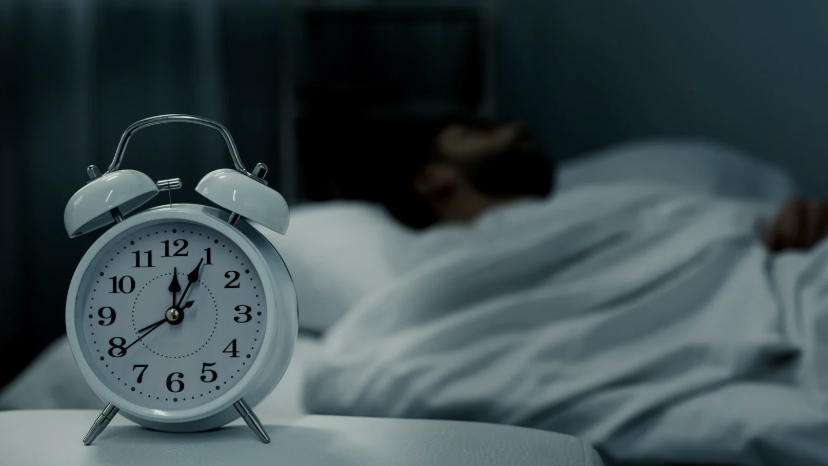
A friend and I were recently discussing the book Stolen Focus: Why You Can’t Pay Attention – and How to Think Deeply Again by Johann Hari (copyright 2022) and were specifically enthralled by the research he shared in Chapter 3: “Cause Three: The Rise in Physical and Mental Exhaustion.” We both think this information needs to be shared, so that is what I hope to do here. I also hope you will pass it along.
As you read the following information, I encourage you to consider what is new for you and how you predict it might influence your sleep habits. I recommend you notice your thoughts, feelings, sensations, memories and beliefs.
- After Hari decided to travel to where he completely cut himself off from all external communication other than having some that he could use in an emergency, he noticed that he was able to think more clearly and for much longer stretches. “I decided to explore the best scientific evidence about how the mysterious long stretches of unconsciousness our bodies crave—and that we so often deny them—might affect our ability to pay attention.” [p. 65]
- He shared the research from Dr. Charles Czeisler, who studied sleep patterns and issues for decades and provided the following data: “Today 40% of Americans are chronically sleep deprived, getting less than the necessary minimum. In Britain, an incredible 23% are getting less than five hours a night. Only 15% of us wake up from our sleep feeling refreshed. This is new. Since 1942, the average time a person sleeps has been slashed by an hour a night. Over the past century, the average child has lost 85 minutes of sleep every night. There is a scientific debate about the precise scale of our sleep loss, but the National Sleep Foundation has calculated that the amount of sleep we get has dropped by 20% in just 100 years.” [pp. 66,67]
- He goes on to share that, “As you become tired, your attention will indeed blink out, for a simple reason. People think you are either awake or asleep, but he found that even if your eyes are open and you are looking around, you can lapse without knowing it into a state called ‘local sleep.’ This is where part of the brain is awake and part of the brain is asleep.” [p. 67]
- Dr. Charles found that, “The effects of sleep deprivation are especially terrible for children. I don’t usually respond by becoming drowsy, but kids usually respond by becoming hyperactive. We are chronically sleep-depriving them, so it’s no shock they are exhibiting all the symptoms of sleep deficiency—the first and foremost of which is the inability to pay attention. It turns out that there is a broad scientific consensus that if you sleep less, your attention will likely suffer.” [p. 67]
- Dr. Charles and a colleague did research on college students and found that “if they stayed awake for 18 hours–so if they woke up at 6 AM and went to sleep at midnight–by the end of the day, their reactions are the equivalent to if they had 0.05% blood alcohol, the equivalent of being legally drunk.” [p. 69]
- Dr. Charles acknowledges that there are many times when people have to lose sleep, like parents with young children or people surviving a hurricane. “You can do that—but it comes at a cost. The cost is that your body shifts into the sympathetic nervous system, so your body is like, ‘Uh-oh, you’re depriving yourself of sleep, this must be an emergency, so I’m going to make all these physiological changes to prepare yourself for that emergency. Raise your blood pressure. I’m going to make you want more fast food. I’m going to make you want more sugar for quick energy. I’m going to make your heart rate rise’… Your brain doesn’t know you’re sleep deprived because you’re goofing off and watching a silly TV show, but the net effect is a physiological sort of alarm bell. In this bodily emergency, your brain doesn’t just cut back on immediate short-term focus, it cuts off resources to other long-term forms of focus too. When we sleep, our minds start to identify connections and patterns from what we’ve experienced during the day. This is one of the key sources of our creativity—it’s why narcoleptic people, who sleep a lot, are significantly more creative. Sleep deprivation damages memory as well. When you go to bed tonight, your mind will start to transfer the things you have learned during the day into your long-term memory. These effects are especially powerful for children. If you deprive kids of sleep, they begin to show attention problems rapidly, and often go into a manic state. [pp. 69, 70]
- Dr. Charles and his colleague described how many people try to battle these issues by consuming caffeine, often in the form of coffee or soda. (A side note: he shares that Elvis, in the last years of his life, had a doctor who would wake him up by injecting caffeine directly into his veins!) “Throughout the day, in your brain, a chemical called adenosine is building up, and it signals to you when you are sleepy. Caffeine blocks the receptor that picks up on the level of adenosine. I liken it to putting a Post-it note over your fuel gauge indicator. You’re not giving yourself more energy—you’re just not realizing how empty you are. When the caffeine wears off, you are doubly exhausted. The less you sleep, the more the world blurs in every way—in your immediate focus, in your ability to think deeply and make connections, and in your memory.” [p.76]
- “As we find ourselves wired and unable to sleep, more and more of us are turning to drugs to knock ourselves out—whether it’s melatonin or alcohol or Ambien. Nine million Americans–4% of adults—are using prescription sleeping pills, and vastly more are using over-the-counter sleep aids. One of the researchers told him, “If you chemically induce sleep, it’s not the same kind of sleep. Remember—sleep is an active process, in which your brain and body do lots of things. Many of these things don’t happen, or happen far less, in drugged or drunk sleep.…Of Ambien and the other prescribed sedatives, she warns, sleep is a really important balance of many, many neurotransmitters, and if you artificially pump up one, it changes the balance of that sleep. You will likely have less REM sleep and fewer dreams, and so you lose all the benefits that come from this crucial stage. You are likely to be groggy throughout the day, which is why sleeping pills increase risk of death from all causes.” [pp. 73, 74]
- Hari ends the chapter by saying that, “We live in a culture that is constantly amping us up with stress stimulation… We live in an apparent paradox. Many of the things we need to do are so obvious they are banal: slow down, do one thing at a time, sleep more. But even though at some level we all know them to be true, we are in fact moving in the opposite direction towards more speed, more switching, less sleep. We live in a gap between what we know we should do, and what we feel we can do. The key questions, then, are: What’s causing the gap? Why can’t we do the obvious things that would improve our attention?” [pp. 77,78]
As I said at the beginning of this blog, my friend and I found this information to be very powerful, alarming, inspirational, and challenging. I hope you noticed your reactions to it: thoughts, feelings, sensations, memories, beliefs. As with much information we first hear, we can struggle with the impact it makes on us before we can actually take action. I know I feel challenged in this regard.
Invitation for Reflection
- What information in this blog surprised you?
- What were some of the ways you responded in terms of what you noticed: your thoughts, feelings, sensations, memories, and or beliefs?
- In what ways do you feel motivated? What specific information motivated you?
- Are there people in your life you want to share this information with?
Diane Wagenhals
Director Emeritus, Lakeside Global Institute