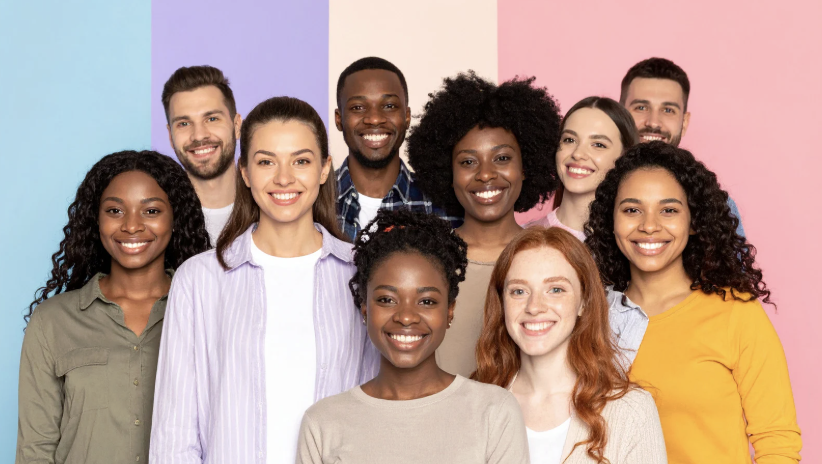
I always like finding new powers I and others have to improve our lives and the lives of those we care about. I thought reading about the power of smiling would be eye-opening for you. I hope this exploration will make you smile 😊
First, some science about smiling. According to the website Flip Science:
“‘It takes 43 muscles to frown, and only 17 muscles to smile.’ No doubt, you’ve already come across this piece of conventional wisdom (or some variation of it, with different numbers). Regardless of the numbers indicated, the core message remains the same: It takes more effort to frown, so why not just turn it around? However, this well-meaning (if overly simplistic) piece of advice only sounds scientific. In fact, there might not even be a ‘true’ answer to this smile-or-scowl stumper.’”
The website Psychology Today provides us with some helpful information in its article entitled “The Extraordinary Power of a Smile”:
“For starters, what constitutes a smile (or a frown) varies from person to person. Does a smirk count as a smile? If the corner of your mouth turns down, is that a frown? Plus, research has shown that we don’t all have the same number of facial muscles; a 2008 study of 18 Caucasian cadavers revealed that while five sets of muscles—the ones that controlled expressions of anger, happiness, surprise, fear, sadness and disgust— were present in all subjects, there were variations in at least 11 others.
Furthermore, smiling affects not just yourself, but also the people around you. In a 2002 study, Swedish researchers found that people tend to mirror the facial expressions they see. Participants found it easier to smile when exposed to images of smiles; the same effect was observed for frowns. Humans are wired to respond in kind because of mirror neurons, brain cells that fire both when we perform an action and observe the same action performed before us. (This explains why smiles are indeed contagious.)
Research has also shown that just like how happiness can make you smile, smiling can make you happy. A 2019 paper that examined 50 years’ worth of data (spanning 138 studies and over 11,000 participants worldwide) found that facial expressions can prompt us to feel the emotions we associate with them.
Key points:
- Smiling enhances health by reducing stress, boosting mood, and fostering emotional well-being.
- Babies’ social smiles strengthen bonds, activating dopamine and happiness in both infants and adults.
- A smile’s power transcends emotions, promoting connection and enriching human interactions.
Does a smile still hold its magic if hidden behind a mask? For nearly two years, we rarely saw the faces of others. Neurologist Debashish Mridha suggests, ‘A smile has a magical power; it makes everyone smile back.’ But what if no one can see it? In a world of face masks, have we muted the power of a smile, a fundamental human expression?
Mother Theresa famously said, ‘Peace begins with a smile.’ Can we foster greater understanding and connection by removing our masks and allowing our smiles to shine? Smiles remain one of the most potent tools for connection and well-being. Whether visible or not, they enrich our lives, improve our health, and foster human connection. So, smile—and let the world smile with you. But make sure they can see it.”
You may be familiar with the song “Smile” first sung by Nat King Cole. Here are the lyrics:
“Smile though your heart is aching
Smile even though it’s breaking
When there are clouds in the sky
You’ll get by
If you smile through your fear and sorrow
Smile and maybe tomorrow
You’ll see the sun come shining through
For you
Light up your face with gladness
Hide every trace of sadness
Although a tear may be ever so near
That’s the time you must keep on trying
Smile, what’s the use of crying?
You’ll find that life is still worthwhile
If you’ll just smile
That’s the time you must keep on trying
Smile, what’s the use of crying?
You’ll find that life is still worthwhile
If you’ll just smile”
(Songwriters: Charles Chaplin, Geoffrey Parsons, John Turner)
As you can see, smiles can be powerful in the ways they can impact others and impact the person who is smiling. Best of all, they are free to give and receive!
Invitation for Reflection
- As you read this blog, did you have any thoughts, feelings, sensations or memories?
- How does this information impact you? Will you now be more intentional about smiling at others?
- How do you anticipate others will respond your smiles?
Diane Wagenhals
Director Emeritus, Lakeside Global Institute