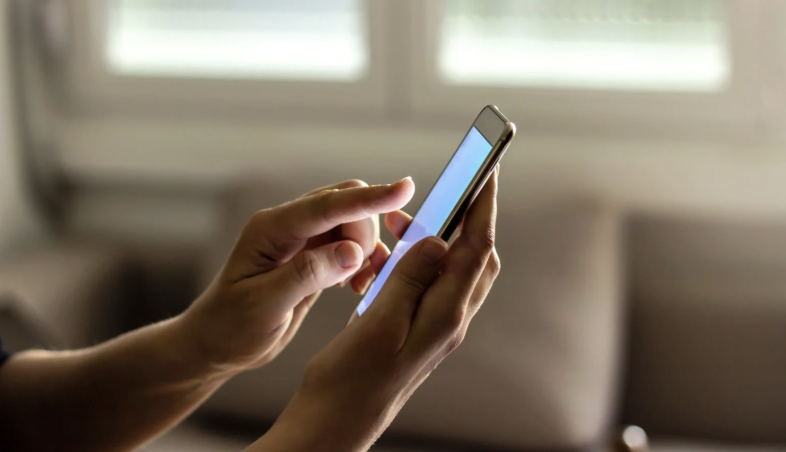
Recently I was in a waiting room after having a mammogram and observed everyone, women of all ages, staring at their cell phones. No one made eye contact with those in the room, not looking up to engage in even a moment of connection. As a new person came into the room within seconds, she too had pulled out her phone and stayed on it until she was told she could leave. It seemed to me that each of these women were addicted to their phone. And maybe some of this was the result of feeling anxious about what they would hear regarding the results of their mammogram, but still their phones were what they turned to instead of looking for comfort or a smile from someone else in the room.
As a matter of principle, I only took my phone out of my purse once to respond to a text and quickly put it back, turning my attention to the book I was reading, looking up at the group periodically to see if anything had changed. The experience got me to thinking: what does research tell us about phone addiction?
I started with researching when cell phones, then called mobile phones, were invented. Here’s what I found on Wikipedia:
“Motorola was the first company to produce a handheld mobile phone. On 3 April 1973, Martin Cooper, a Motorola researcher and executive, made the first mobile telephone call from handheld subscriber equipment, placing a call to Dr. Joel S. Engel of Bell Labs, his rival. The prototype handheld phone used by Dr. Cooper weighed 2 kilograms (4.4 lb.) and measured 23 by 13 by 4.5 centimeters (9.1 by 5.1 by 1.8 in). The prototype offered a talk time of just 30 minutes and took 10 hours to re-charge. Commonly referred to as ‘the Brick’, it was not commercially launched until October 1983, and only then in the U.S.
(A picture can be seen here!)
So, cell phones have been around for decades.
I then researched how many cell phones are being used today and found the following information which was corroborated in several other research articles. According to the website Consumer Affairs:
“Cell Phone Statistics 2026” by Alexus Bazen. Updated January 22, 2026
“When Motorola introduced its first mobile phone in 1984, the company hoped for a buying frenzy. But even the best marketers couldn’t have predicted the success of mobile phones. Today, mobile phones are an essential part of daily life, as more people depend on them for communication, work, social networking, online shopping, and more.
Key insights
As of 2024, 98% of Americans (331 million people) own a mobile phone. More than nine out of 10 (91%) own a smartphone.
Each day, Americans spend 4 hours and 30 minutes on their mobile phones and check their phones 144 times per day.”
What is the impact on the brain for someone addicted to their phone? A video from CBS News explains:
“Research shows excessive phone use alters the brain, making users less attentive and more prone to mental health struggles. Experts say the key to breaking ‘brain rot’ may be going analog with hobbies away from a digital screen.”
More research on the impact of screen time:
According to JAMA, “Addictive Screen Use Trajectories and Suicidal Behaviors, Suicidal Ideation, and Mental Health in US Youths”:
“Question: Are addictive screen use trajectories associated with suicidal behaviors, suicidal ideation, and mental health outcomes in US youth?
Findings: In this cohort study of 4285 US adolescents, 31.3% had increasing addictive use trajectories for social media and 24.6% for mobile phones over 4 years. High or increasing addictive use trajectories were associated with elevated risks of suicidal behaviors or ideation compared with low addictive use. Youths with high-peaking or increasing social media use or high video game use had more internalizing or externalizing symptoms.
Meaning: Both high and increasing addictive screen use trajectories were associated with suicidal behaviors, suicidal ideation, and worse mental health in youths.”
Other research shows similar results with adults. The bottom line: cell phone addiction is a real thing with potentially devastating results. As with any addiction it requires experiencing withdrawal, and a person needs to apply the principles and behaviors espoused by groups like Alcoholics Anonymous. No matter what, it requires a high degree of determination to break the habit – the compulsion – to constantly stay on one’s phone.
Many schools are now prohibiting use of cell phones, much to the initial dismay of students and some parents.
Some information from the Paragon Health Institute offers more statistics on the impact of discontinuing cell phone usage during school hours:
- “Smartphones have become pervasive distractions in schools. More than 95 percent of U.S. teens own devices, with nearly half reporting excessive social media use.
- Research shows that cell phone bans can improve academic achievement. Evidence on mental health benefits remains mixed, though schools have reported fewer behavioral problems, reduced bullying, and improved classroom engagement.
- U.S. states and districts are increasingly adopting cell phone restrictions with varying policy approaches, each with different benefits and challenges. Bell-to-bell bans offer the most comprehensive restrictions but require substantial infrastructure investment, while instructional-time bans are easier to implement but may provide more limited benefits and face enforcement challenges.”
“In April 2025, we collected data from teachers in a southeastern Virginia school division regarding the state’s newly implemented K-12 cell phone ban. Our results aligned with previous research. Most teachers (78 percent) supported the policy, with 62 percent reporting improved student behavior. In focus groups, teachers described increased student engagement and stronger peer interaction due to reduced phone distractions as well. Teachers also noted fewer classroom disruptions and better focus among students.”
All in all, I think an increased awareness of the impact of obsessive cell phone use is important for us all to know and appreciate. This awareness and understanding can empower us to make sure we are in charge of our phone use and not controlled by it.
Invitation for Reflection
- How would you describe your relationship with your cell phone?
- Do you think you are addicted to your phone? If not, how do you know that?
- If your answer is yes, what can you do to break that addiction?
- How can you help any children in your life to be more aware of the potential that exists for them to become addicted?
Diane Wagenhals
Director Emeritus, Lakeside Global Institute