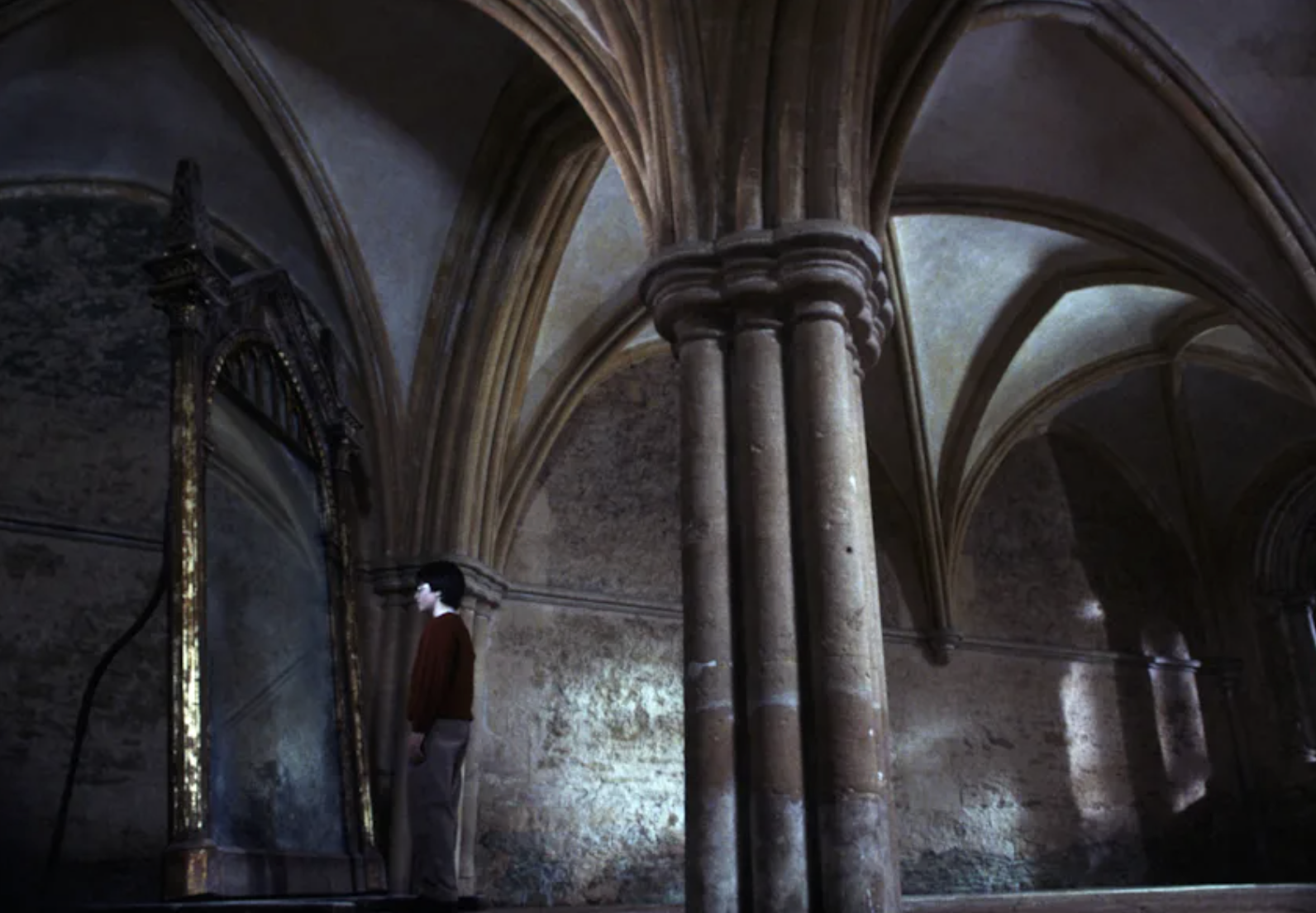
I am a big Harry Potter fan and something Professor Dumbledore said to Harry in the movie Harry Potter and the Sorcerer’s Stone got me thinking. I thought I’d share some of those thoughts and the research I did with you.
Harry stumbled on a magical mirror one day when he was exploring Hogwarts, the school of magic he was attending. The mirror is called “Erised” which is “desire” spelled backwards. It allowed him to come face to face with the family he never knew.
Here is the description from the website harrypotter.com: “Not only does he see his late parents, Lily and James, in the mirror, but other descendants who share similarities with him. Harry is described as feeling ‘half joy, half terrible sadness’ as he sees what his life could’ve been if Lord Voldemort hadn’t killed his parents.”
Additional descriptions of the mirror: “When someone looks into the mirror, they see a reflection of their deepest yearning, which can lead to obsession or madness if they do not confront their desires.”
“The writing engraved on the frame of the mirror was allegedly in a foreign and probably dead language, but if one looked closely it said “I show not your face but your heart’s desire” backwards, with the spaces rearranged. Erised stra ehru oyt ube cafru oyt on wohsi.”
Part of the genius of J. K. Rowling, the author of the Harry Potter books on which all the movies are based, was her ability to capture the imagination of readers and movie viewers and to take them on fanciful journeys where each story wove magical experiences of characters with lessons about good versus evil. The appeal of the books and movies is evident in the number of books sold and movies viewed. (500 million books sold, and the Harry Potter film series grossed over $9.56 billion worldwide, making it the highest grossing film series of all time.)
Symbolic Meaning
“Beyond its magical properties, the mirror serves as a mirror to the soul. Illustrating the human tendency to yearn for what is missing or unattainable. It emphasizes the bittersweet nature of desire: while it can inspire hope and reflection, it can also lead to distraction or despair if one becomes fixated. Albus Dumbledore warns Harry that the mirror is enchanting but potentially harmful, as it can trap people in longing for things they cannot have, preventing them from engaging with the real world.”
Here is Professor Dumbledore’s statement after he noticed that Harry was spending an inordinate amount of time in front of the Mirror of Erised: “It does not do to dwell on dreams and forget to live.” I thought there was wisdom in the statement because we do need to live in the present. At the same time, I think we also need to be able to dream, to dream about our hopes, the potential we believe we and others have to do important things in this life, to engage with people we love. I think we can do both. What do you think?
In my next blog, I will invite you to consider the antidote for spending too much energy on dreaming. 😊
Invitation for Reflection
- What do you think you would see if you had the opportunity to gaze into the Mirror of Erised?
- What does that tell you about what you wish was true in your life?
- Do you think it is healthy to both live in the present and have your dreams? Why or why not?
Diane Wagenhals
Director Emeritus, Lakeside Global Institute