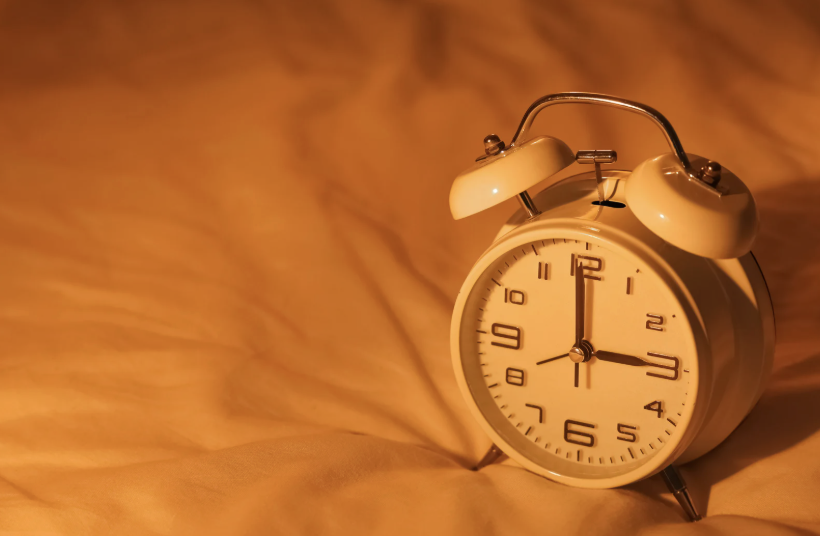
As someone who had always been a night owl and recently has also become an early bird who needs a nap every day, I found this information to be interesting – and obviously there are differing opinions on the subject.
According to an article written by Vivek Kumar, Aug 30, 2025 on the website Yahoo!Life: “We all know that early birds get the worm. But who wants a worm? Not me. For most of my life I have identified as a night owl, clambering out of bed as late as possible and not so much seizing but reluctantly easing into the day.
US work culture is not really optimal for night owls. Rather, it favors CEOs who get up at 4am and run a marathon while the rest of us hit the snooze button. Still, I always consoled myself with the idea that night owls are actually more intelligent and creative than their early bird counterparts. Franz Kafka and Thomas Wolfe wrote at bedtime; Bob Dylan recorded at night. Even scientific studies indicated it was true.
Is there any evidence night owls are smarter than early birds?
Back to that all-important question, though: does being a night owl make you more creative and intelligent?
One 2007 study found “that evening-disposition is correlated with the ability to apply divergent thinking strategies to visual content” – a science-y way of saying “more creative”. In a 2009 study called “Why night owls are more intelligent”, psychologist Satoshi Kanazawa checked the bedtimes of 20,745 adolescents against the results of an intelligence test. He found people with higher intelligence were more likely to be night owls, and posited that it might be because it’s “evolutionarily novel” to stay up late.
More recently, researchers at Imperial College London studied UK data on more than 26,000 people who had completed various intelligence tests. The 2024 paper found that those who stay up late had “superior cognitive function” to morning larks.”
Seemed like pretty compelling research! However….
“One 2020 cohort study of more than 5,000 people published in the Scandinavian Journal of Medicine and Science in Sports had people who were early birds and night owls wear activity trackers on their wrists for two weeks. The researchers found that early birds had up to 60 to 90 minutes more activity during the day than their night owl counterparts. (Worth noting: Being physically active is linked to a lowered risk of developing a slew of serious health conditions, including heart disease, stroke and type 2 diabetes.)
A study published in JAMA Psychiatry in 2021 linked early birds with a lowered risk of developing depression. For the study, researchers analyzed two genetic databases of more than 800,000 adults, along with data on major depression diagnoses and when people typically went to sleep and woke up. The researchers found that people who were early birds had a 23% lower risk of developing major depression for every hour earlier they reached their midpoint of sleep (that is, the middle of their sleep cycle).
Another study, this one published in the Annals of Internal Medicine in September, linked being a night owl to having a greater risk of developing type 2 diabetes. The study analyzed data from 63,676 nurses from the ages of 45 to 62 and found that those who preferred to stay up late were 54% more likely to have unhealthy lifestyle habits, such as smoking, not sleeping enough, not exercising and a poor diet. The researchers also discovered that night owls were 19% more likely to develop type 2 diabetes.
Being an early bird is even linked to having a longer life. A Chronobiology International study published earlier this year followed nearly 24,000 twins from 1981 to 2018 and asked them about their sleep habits. The researchers also looked at death records and, after adjusting for factors like alcohol use, smoking, body mass and sleep duration, found that night people had a 9% greater risk of early death than their morning counterparts.”
After reading these two opposing articles I thought I’d look for something based on neuroscience. Here’s what I found on the website OnlyMyHealth in an article about the neuroscience of early risers versus night owls written By: Vivek Kumaron Aug 30, 2025:
“Rachel Barr, a neuroscientist, explains in an Instagram video how your body decides when you feel most awake and productive. She says, ‘We’re often told the key to success is getting up early. But it’s not just the alarm clock that wakes you up. It’s also your body’s internal timekeeping system.’
This system controls when you feel hungry, sleepy, and alert during the day. The tricky part? A lot of it is wired into your genes. For example, if you have a night owl genetic profile, you tend to sleep and wake later naturally. Rachel explains, ‘If you’re a night owl, waking up at 5 a.m. might not work well because you’d be missing crucial REM sleep.’”
I guess we each are who we are for a variety of reasons. I think what is most important is to be comfortable in our own skin, sleeping in ways our bodies seem to want us to sleep.
Invitation for Reflection
- Did you recognize yourself in one of the articles? How did that article make you feel?
- Does the information help you better understand others in your life?
- Are you comfortable being who you are, either an early bird or night owl? If not, how might you accept yourself and your sleep patterns as normal for you and then find ways to reap the benefits of that sleep pattern?
- Suppose you are someone who isn’t either of these, someone who goes to bed at a reasonable time and then typically gets up mid-morning?
- And what about parents or caregivers of infants and young children or all the students who are forced to be up very early to get to school? 😊
Diane Wagenhals
Director Emeritus, Lakeside Global Institute